In a move that is destined to improve healthcare for thousands of Massachusetts seniors and people with disabilities, 22,000 Massachusetts home care workers have voted to join 1199 SEIU, the healthcare workers union. The vote passed by a landslide margin of 94% Yes to 6% No.
"I am proud to stand here with 1199 SEIU to support the dedicated health care workers who offer care and compassion to us all. Home is where people want to live and PCAs make it possible for seniors and people with disabilities to live at home with independence and dignity," Mayor Menino said. "By ensuring fair compensation and benefits for PCAs, we can improve the lives of both consumers and healthcare workers. This is a great step forward for the people of Boston and the entire state."
“This is a tremendous organizing victory for our union and we welcome our 22,000 newest members. Raising the standards for PCAs in the home health industry is critical to the livelihood of thousands of low-wage workers in Massachusetts and around the country,” said George Gresham, President of 1199 SEIU United Healthcare Workers East. “This historic vote should serve as a beacon of hope and progress in the struggle to attain justice and a living wage for home care workers.” Personal care attendants (PCAs) from across the state voted in the historic election through special mail-in ballot starting on October 16th.
The election was the largest of its kind in the history of New England. “This is a great day for home care workers, and also for the people they care for,” said 1199 SEIU Executive Vice President Mike Fadel. “Stabilizing the PCA workforce will make it easier for seniors and people with disabilities to live at home with independence and dignity.”
Currently, PCA home care workers do not have health insurance benefits, despite being caregivers themselves. They also receive no sick days or vacation time. Many of the consumers in the state struggle to keep caregivers on the job, as 40-60% of PCAs leave their positions every year for jobs with benefits or higher compensation. The vote gives personal care attendants a voice for better wages and benefits by uniting them with the largest local healthcare union in the country. It also organizes PCAs in a way that senior and disability advocates say will make them more accessible to those who require their essential services.
"Home care workers perform some of the most difficult and most important jobs in our society. Yet all too often, their indispensable work is under-valued and under-appreciated,” said Massachusetts Senator Ted Kennedy in a statement of support, “I congratulate 1199 SEIU and the home care workers of Massachusetts on this significant achievement, and I look forward to working with them in the years ahead to protect these hard-won rights."
"This will significantly improve the lives of individuals who use PCAs," said Bill Henning, Executive Director of the Boston Center for Independent Living. "This vote goes a long way toward correcting one of the biggest challenges facing seniors and people with disabilities in Massachusetts today, which is the constant difficulty in finding and retaining attendants."
“I’ve been doing this job for over twenty years and I love it, but it’s hard to support a family making $10.84 per hour with no sick days,” says PCA Hertenza Spence of Lynn, MA. “It was a no-brainer for me. Now we have hope to stay on the job and keep everybody happy and healthy, including myself.” 1199 SEIU members say the victory will allow the union to devote even more energy and resources to another top priority – the effort to achieve free and fair union elections for the Commonwealth's non-union hospital workers. 1199 SEIU, Mayor Thomas M. Menino, and the Boston City Council have called on Boston hospital CEOs to pledge they will not intimidate or harass hospital workers during union elections.
Showing posts with label Press Release. Show all posts
Showing posts with label Press Release. Show all posts
Monday, November 12, 2007
Thursday, November 8, 2007
My First Magazine Edition As Editor In Chief of "Solutions" Is Released Today

Today was the release of my first issue as Editor In Chief of "Solutions," a monthly e-magazine produced by Hire Disability Solutions. In my first magazine issue, I included the following:
- Interviews with the Presidential Candidates
- Movie Review of "The Music Within"
- Q & A with Assistant Secretary of ODEP, Karen Czarnecki
- "Working Matters" Feature Article: Trends In Travel
- Employment Conference Article by Kelly Rouba, Ms Wheelchair NJ
- ...much more!
Go to www.hireds.com to read the magazine: "Solutions": Volume 4, November, 2007. And check back on the website in a week or two - I am redesigning it to be more user-friendly and interactive.

Monday, October 15, 2007
Ms Wheelchair Massachusetts Article Appears in South Boston Online Newspaper
South Boston Online
Ms. Wheelchair Massachusetts
By Rick Winterson
October 4, 2007
Ms. Wheelchair Massachusetts
By Rick Winterson
October 4, 2007

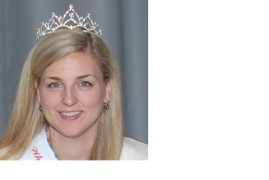
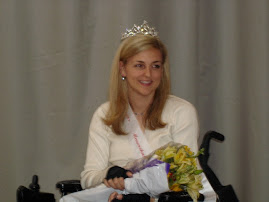
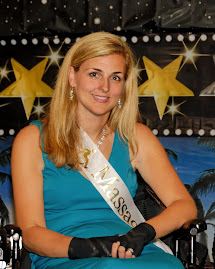
South Boston’s Kristen McCosh is Ms. Wheelchair Massachusetts 2007. Her accomplishments are already long and varied, and she’s embarking on two new careers as well. Oh yes, she also writes novels.
Kristen McCosh is the daughter of John and Dolores (Cashman) Donoghue, who are both still living in South Boston on Marine Road. John was originally from Dorchester, but came to his senses and married Dolores, a South Boston girl. Kristen is a Southie “lifer” also. The family, which includes Kristen’s two brothers – John, a construction worker, and Christopher, an X-ray technician – lived on L Street between Sixth and Seventh during their younger years.
Kristen attended St Peter’s School and Mount St. Joseph. She then went on to UMass Boston, where she graduated with a Bachelor’s degree in English. Since that time, she has held a number of positions in various health institutions and non-profit agencies.
Hers was a seemingly normal existence, except that on June 6, 1983, almost 25 years ago, she experienced one of those wrenching, life-altering accidents. She shattered her sixth cervical vertebra (the C-6) diving in a backyard swimming pool, causing a severe spinal cord injury (SCI). This disabled most of the motor nerve pathways to her limbs, leaving her with mobility only in her arms, and even that is quite limited. She lost any use of her legs, hands, and fingers.
Kristen describes her feelings after the accident as “being more scared than depressed”. Her family and friends stuck closely by her – she received as many as 20 visits a day while she was in the hospital. Anyone who has lived in South Boston for awhile knows that the prayers and the Southie “times” poured in.
Still, Kristen had to face up to spending the rest of her life in a wheelchair. You see, she was now a quadriplegic, even though she retained some use of her arms. Quadriplegia is defined as a severe cervical (neck) SCI that leads to major or complete impairment in both arms and both legs. So, her therapy began, and her health and conditioning routines continue to this day.
After receiving her degree from UMass, Kristen worked for Cambridge’s Disability Commission, and went on from there to a position with the City of Boston Mayor’s Health Line. In 2000, she joined the Neighborhood House as Volunteer Coordinator, working also on development projects. Since June, 2007, she has been a peer mentor at the Spaulding Early Intervention Unit for SCIs, her current new career. As of this writing, she has just become the Editor of “Solutions”, an online e-magazine for those with disabilities (http://www.hireds.com/). That’s her second new career.
She met her husband, John McCosh, at UMass. They were both taking an English major, and John asked her for an interview for an article. He now admits that was really just an excuse to get to know her better. John then transferred to London for a few years with State Street Bank but they continued to see each other. In 1996, he flew back at Christmastime and proposed to Kristen. They were married and moved into their home on Sixth Street in 2001. Their affection is evident in the glances they exchange and the consideration they show to one other.
Kristen won Ms. Wheelchair Massachusetts 2007 earlier this year, and then ran nationally. The final judging took place in Washington, D.C., this July – Kristen came in as second runner-up out of a field of 27. She has been spending around 20 hours a week on Ms. Wheelchair America since then. She blogs every day on http://www.mswheelchairmass.org/ The Ms. Wheelchair organization is devoted to outreach, disability education, and so on.
Kristen and John are both novelists. She writes romances; he’s beginning a fantasy tale. John is also a talented photographer, who is selling his works to support the Ms. Wheelchair programs and is exhibiting right now at Cranberry Café. Kristen drives, works out, and continues to write, while holding down a job. According to her, “I even cook a little.” She describes her condition by saying, “If I stay bed-ridden, I’m dependent. Once I’m in my wheelchair, I’m completely independent.”
Amen.
Saturday, October 13, 2007
Article on Accessible Whale Watching To Appear in "ThisAbled"
Kelly Rouba, Ms Wheelchair New Jerey 2007, recently interviewed me for an article she is writing on accessible whale watching. The article will be appearing soon on www.thisabled.com.
Watch for it!
Watch for it!
Tuesday, October 2, 2007
My "Welcome Letter From The New Editor" for Solutions e-Magazine
Welcome Letter from the New Editor
By Kristen McCosh
October, 2007
At Hire Disability Solutions, LLC, we believe that employment matters. Employment is the driving force behind the American economy; it not only allows workers to earn a steady income, it often provides access to health insurance and options for a retirement plan. It is a vital part of everyday life. In fact, people who work full-time generally spend more hours at the office than they do at home interacting with their families.
But there is much more involved with employment besides the desk that you sit at from 9 to 5 every day. Employment opens doors to socialization and friendship; it offers recreational opportunities through company picnics and charity walks. Many corporations offer discounts to fitness centers, and some even have their own workout facilities on site. Vacation days are allotted – even encouraged – to allow for travel and adventure. And the list goes on and on: romance, fashion, education, transportation, technology – all of these things are employment matters.
These types of employment-related matters contribute to job satisfaction and play a crucial role in our overall outlook on life. “People feel happier if opportunities for friendship exist at work,” according to Christine Riordan, Associate Dean of the Neeley School of Business at Texas Christian Academy. This is one of the main reasons that people with disabilities who are left out of the job market are more prone to isolation and depression. When they miss out on employment opportunities, they also miss out on opportunities to expand social circles, develop meaningful and lasting relationships, pursue education and master technology, and fully participate in all society has to offer.
There is an untapped pool of qualified job seekers with disabilities who have diverse experiences and are able and eager to go to work. The mission of Hire Disability Solutions is to give all who want a chance to succeed, the opportunity to succeed. The vision of Hire Disability Solutions is to ensure a society where individuals with disabilities have an equal chance to succeed in the workforce.
Employment matters, especially to people with disabilities, and that’s why Hire Disability Solutions is here. But the issues that are associated with employment also matter. And that’s why I’m here. I am the new Editor of Solutions, the monthly e-Magazine of Hire Disability Solutions, LLC. I have a disability and have been employed for a long time, so I have experienced many of these things first-hand. I will be writing a new column each month called “Working Matters,” which will focus on the work-related issues that contribute to overall happiness and wellbeing, especially as they apply to people with disabilities.
I encourage input from readers on topics you would like to see us write about. Feedback and “Letters to the Editor” are always welcome. It is with great joy that I look forward to discovering what matters to you.
Sincerely,
Kristen McCosh
By Kristen McCosh
October, 2007
At Hire Disability Solutions, LLC, we believe that employment matters. Employment is the driving force behind the American economy; it not only allows workers to earn a steady income, it often provides access to health insurance and options for a retirement plan. It is a vital part of everyday life. In fact, people who work full-time generally spend more hours at the office than they do at home interacting with their families.
But there is much more involved with employment besides the desk that you sit at from 9 to 5 every day. Employment opens doors to socialization and friendship; it offers recreational opportunities through company picnics and charity walks. Many corporations offer discounts to fitness centers, and some even have their own workout facilities on site. Vacation days are allotted – even encouraged – to allow for travel and adventure. And the list goes on and on: romance, fashion, education, transportation, technology – all of these things are employment matters.
These types of employment-related matters contribute to job satisfaction and play a crucial role in our overall outlook on life. “People feel happier if opportunities for friendship exist at work,” according to Christine Riordan, Associate Dean of the Neeley School of Business at Texas Christian Academy. This is one of the main reasons that people with disabilities who are left out of the job market are more prone to isolation and depression. When they miss out on employment opportunities, they also miss out on opportunities to expand social circles, develop meaningful and lasting relationships, pursue education and master technology, and fully participate in all society has to offer.
There is an untapped pool of qualified job seekers with disabilities who have diverse experiences and are able and eager to go to work. The mission of Hire Disability Solutions is to give all who want a chance to succeed, the opportunity to succeed. The vision of Hire Disability Solutions is to ensure a society where individuals with disabilities have an equal chance to succeed in the workforce.
Employment matters, especially to people with disabilities, and that’s why Hire Disability Solutions is here. But the issues that are associated with employment also matter. And that’s why I’m here. I am the new Editor of Solutions, the monthly e-Magazine of Hire Disability Solutions, LLC. I have a disability and have been employed for a long time, so I have experienced many of these things first-hand. I will be writing a new column each month called “Working Matters,” which will focus on the work-related issues that contribute to overall happiness and wellbeing, especially as they apply to people with disabilities.
I encourage input from readers on topics you would like to see us write about. Feedback and “Letters to the Editor” are always welcome. It is with great joy that I look forward to discovering what matters to you.
Sincerely,
Kristen McCosh
Sunday, September 30, 2007
Interview With South Boston Onlline
Look for me in The South Boston Online newspaper in the next week or two! I was interviewed by Rick Winterson the other day...
Friday, September 28, 2007
My New Venture - Editor of "Solutions" e-Magazine


I have just accepted the position of Editor for an e-magazine called Solutions that is put out by Hire Disability Solutions, LLC (www.HiredDS.com). Jeff Klare, the CEO, is bringing me to New York City next week to meet with the staff, although I will generally be working from home. My start date will be October 1.
The mission of Hire Disability Solutions is to give all who want a chance to succeed, the opportunity to succeed. Their vision is to ensure a society where individuals with disabilities have an equal chance to succeed in the workforce. Hire Disability Solutions, LLC, is committed to increasing independence among individuals with disabilities. They empower individuals with disabilities to reach their goals by providing them with the tools to succeed. They present information and resources for individuals to connect with employers, build their skills, and discover the feeling of accomplishment. As a company policy, they focus on promoting what people can do and helping them find ways that utilize their skills. They continuously explore new ways to reach the public to influence their knowledge about, attitudes of, and behaviors towards individuals with disabilities.
Hire Disability Solutions applies their knowledge and business expertise to help companies fully utilize the diverse set of strengths available within the labor pool to achieve business objectives. They create a means for companies to tap into a pool of qualified job seekers of diverse experiences, and build competencies that promote acceptance, tolerance, teamwork, and ultimately success among the workforce.
Visit their website Hire Disability Solutions to sign up for this FREE monthly e-magazine, Solutions, and check out all the interesting things I'm working on!
Monday, September 24, 2007
Ms. Wheelchair America's Message
Ms. Wheelchair America 2008 Shares Message of Empowerment and Hope
By Faiza Elmasry
Voice of America News
Washington, DC
07 August 2007
Most pageants — like Miss USA or Miss America — are primarily about beauty, popularity or talent. But there is a pageant that is all about raising awareness of the achievements of the disabled and reducing the architectural and attitudinal barriers that still impede their quality of life: the Ms. Wheelchair America Pageant.
"This is not a beauty contest," says pageant judge Matt Kelly.
"I've judged beauty pageants before as part of the Miss USA program, where we were looking more at someone's physical beauty," he explains. "But this contest is really based on three things: their accomplishments, their communication skills and their self perceptions."
Kelly says the woman who took home the crown this year scored high on all three criteria.
Alana Wallace, 56, an educational consultant and mother of four adult children, has had post polio since the age of 5. She has been a life-long advocate for people with disabilities.
Wallace is the founder and artistic director of Dance Detour, Chicago's first professional physically integrated dance company. She is also a founding member of Bodies of Work, a disability arts and cultural festival.
"I just want people to know that people with disabilities are productive, talented and capable citizens and that we have so much to offer," Wallace says.
During her yearlong reign, Wallace will tour the country, advocating for fully accessible housing for the disabled.
She says that means more than just widening doorways or eliminating steps. "Many times we purchase condos or move into new homes and we find that while there are maybe turning areas, we can't reach our cabinets. A lot of our appliances are not accessible," she notes. "I support the universal design, which means that the home is going to be useable by anyone."
Although Alana Wallace wore the crown, other pageant contestants say they feel like winners as well.
Ms. Wheelchair Arkansas, Jennifer Briggers, 23, says the event was an opportunity for her to make friends and share her life experiences. "What I'm trying to share is that I've been independent and becoming more and more successful every day, even though I do have a disability," she says.
Briggers is working on her doctorate in psychology. Her mother, Delois Kitchens, who accompanied her to the pageant, says her daughter has always focused on her capabilities and lived her life on her own.
"I had another child, and I didn't treat her differently," she says. "He got a spanking, she got one when she was bad. We treated them the same. She never grew up feeling she was handicapped, I guess."
The annual Ms. Wheelchair America competition has always showcased the abilities, determination and courage of women in wheelchairs, according to contest president Robert Watson.
"They are awesome," he says. "Some have several degrees. Some have PhDs. Some people have come from acquired disability to this point, where they accepted their disability. They are just accomplished women."
Business consultant and author Judy Hoit was Ms. Wheelchair Iowa in 1996 and is still active in the program. She says it has helped raise public awareness of the abilities and needs of the disabled community. She says this year's competition is significant.
"We are celebrating the fact that we've been around for 35 years," she says. "One of the biggest things is the education part of it because every time a person makes an appearance and meets people and tells them maybe transportation situations, employment challenges they have had in a wheelchair, every time they tell their stories or talk to a group, it's always an eye opener. People go, 'Oh, I never thought about that.'"
Autumn Grant says she got that reaction a lot over the past year, as Ms. Wheelchair America 2007. Grant says that although each Ms. Wheelchair chooses her own issue to highlight during her reign, the message is the same.
"I think mainly acceptance, for people to look at people with disabilities and realize although they have differing abilities, they are still people, and you can identify with on so many different levels," she says. "That's something we still need to work on both here and abroad, because there is still so much stigma attached to the disability. We need to get passed that."
Ms. Wheelchair America 2008, Alana Wallace, says she is excited about her new role as a national spokeswoman for the disabled community. She's looking forward to traveling, meeting the public, and speaking out — an example of what women in wheelchairs can achieve.
By Faiza Elmasry
Voice of America News
Washington, DC
07 August 2007
Most pageants — like Miss USA or Miss America — are primarily about beauty, popularity or talent. But there is a pageant that is all about raising awareness of the achievements of the disabled and reducing the architectural and attitudinal barriers that still impede their quality of life: the Ms. Wheelchair America Pageant.
"This is not a beauty contest," says pageant judge Matt Kelly.
"I've judged beauty pageants before as part of the Miss USA program, where we were looking more at someone's physical beauty," he explains. "But this contest is really based on three things: their accomplishments, their communication skills and their self perceptions."
Kelly says the woman who took home the crown this year scored high on all three criteria.
Alana Wallace, 56, an educational consultant and mother of four adult children, has had post polio since the age of 5. She has been a life-long advocate for people with disabilities.
Wallace is the founder and artistic director of Dance Detour, Chicago's first professional physically integrated dance company. She is also a founding member of Bodies of Work, a disability arts and cultural festival.
"I just want people to know that people with disabilities are productive, talented and capable citizens and that we have so much to offer," Wallace says.
During her yearlong reign, Wallace will tour the country, advocating for fully accessible housing for the disabled.
She says that means more than just widening doorways or eliminating steps. "Many times we purchase condos or move into new homes and we find that while there are maybe turning areas, we can't reach our cabinets. A lot of our appliances are not accessible," she notes. "I support the universal design, which means that the home is going to be useable by anyone."
Although Alana Wallace wore the crown, other pageant contestants say they feel like winners as well.
Ms. Wheelchair Arkansas, Jennifer Briggers, 23, says the event was an opportunity for her to make friends and share her life experiences. "What I'm trying to share is that I've been independent and becoming more and more successful every day, even though I do have a disability," she says.
Briggers is working on her doctorate in psychology. Her mother, Delois Kitchens, who accompanied her to the pageant, says her daughter has always focused on her capabilities and lived her life on her own.
"I had another child, and I didn't treat her differently," she says. "He got a spanking, she got one when she was bad. We treated them the same. She never grew up feeling she was handicapped, I guess."
The annual Ms. Wheelchair America competition has always showcased the abilities, determination and courage of women in wheelchairs, according to contest president Robert Watson.
"They are awesome," he says. "Some have several degrees. Some have PhDs. Some people have come from acquired disability to this point, where they accepted their disability. They are just accomplished women."
Business consultant and author Judy Hoit was Ms. Wheelchair Iowa in 1996 and is still active in the program. She says it has helped raise public awareness of the abilities and needs of the disabled community. She says this year's competition is significant.
"We are celebrating the fact that we've been around for 35 years," she says. "One of the biggest things is the education part of it because every time a person makes an appearance and meets people and tells them maybe transportation situations, employment challenges they have had in a wheelchair, every time they tell their stories or talk to a group, it's always an eye opener. People go, 'Oh, I never thought about that.'"
Autumn Grant says she got that reaction a lot over the past year, as Ms. Wheelchair America 2007. Grant says that although each Ms. Wheelchair chooses her own issue to highlight during her reign, the message is the same.
"I think mainly acceptance, for people to look at people with disabilities and realize although they have differing abilities, they are still people, and you can identify with on so many different levels," she says. "That's something we still need to work on both here and abroad, because there is still so much stigma attached to the disability. We need to get passed that."
Ms. Wheelchair America 2008, Alana Wallace, says she is excited about her new role as a national spokeswoman for the disabled community. She's looking forward to traveling, meeting the public, and speaking out — an example of what women in wheelchairs can achieve.
Friday, September 21, 2007
Boston Herald Features SCI Research Story - Friday, September 21, 2007
MIT Scientist: Paralysis Cure Eyed
By Herald staff
Friday, September 21, 2007
http://www.bostonherald.com
The future of curing traumatic spinal cord injuries could be on the horizon, and it involves plastics, according to one of MIT’s top biotechnology professors. Dr. Robert Langer, 59, MIT professor of chemical engineering and the youngest person ever - at 43 - to be appointed to all three U.S. National Academies of science, told the Greater Boston Chamber of Commerce that he and his students began effectively curing rats of paralysis using a plastic scaffold that would be inserted into their bodies.
During the speech, Langer demonstrated what could be a future treatment for humans. He showed a film of the paralyzed rat before it was treated with a special plastic implant coated with neuronal stem cells.The rat could move around but had lost the use of its rear legs.
The film showed the rat weeks later able to walk on all four legs fairly well.
The plastic scaffold helps reduce scar tissue and may help duplicate new cells, Langer said. “Different people have used different models,” Langer said. “It’s a question of how much improved function you get.”
Langer said his research is being partially funded by InVivo Therapeutics Corp., a Cambridge life-science company that is raising funds to treat traumatic spinal cord injuries. Frank Reynolds, CEO of InVivo, declined to give financial specifics, but said the company has a consulting staff of 18 people.
Reynolds said Langer’s use of plastics, which the MIT professor also believes could grow new bone, intestine, liver and ureter cells, would help commercialize the first big breakthrough in treatment of paralysis.
“We believe it will be the first effective treatment for spinal cord injury,” Reynolds said.
Reynolds said Irish officials will be visiting Boston to discuss $10 million in funding for InVivo from the Irish government.
Article URL: http://www.bostonherald.com/business/healthcare/view
By Herald staff
Friday, September 21, 2007
http://www.bostonherald.com
The future of curing traumatic spinal cord injuries could be on the horizon, and it involves plastics, according to one of MIT’s top biotechnology professors. Dr. Robert Langer, 59, MIT professor of chemical engineering and the youngest person ever - at 43 - to be appointed to all three U.S. National Academies of science, told the Greater Boston Chamber of Commerce that he and his students began effectively curing rats of paralysis using a plastic scaffold that would be inserted into their bodies.
During the speech, Langer demonstrated what could be a future treatment for humans. He showed a film of the paralyzed rat before it was treated with a special plastic implant coated with neuronal stem cells.The rat could move around but had lost the use of its rear legs.
The film showed the rat weeks later able to walk on all four legs fairly well.
The plastic scaffold helps reduce scar tissue and may help duplicate new cells, Langer said. “Different people have used different models,” Langer said. “It’s a question of how much improved function you get.”
Langer said his research is being partially funded by InVivo Therapeutics Corp., a Cambridge life-science company that is raising funds to treat traumatic spinal cord injuries. Frank Reynolds, CEO of InVivo, declined to give financial specifics, but said the company has a consulting staff of 18 people.
Reynolds said Langer’s use of plastics, which the MIT professor also believes could grow new bone, intestine, liver and ureter cells, would help commercialize the first big breakthrough in treatment of paralysis.
“We believe it will be the first effective treatment for spinal cord injury,” Reynolds said.
Reynolds said Irish officials will be visiting Boston to discuss $10 million in funding for InVivo from the Irish government.
Article URL: http://www.bostonherald.com/business/healthcare/view
Tuesday, September 18, 2007
"Music Within" Movie About The Founders Of The A.D.A

Oliver Wendell Holmes once said, "Most people go to their graves with their music still inside them."
Guided through the movie by Richard Pimentel's (Ron Livingston) acerbic sense of humor, we see a world that through other eyes would appear devastatingly tragic. Instead, Richard uses it to fuel his plight for the underdog.
Unable to pursue his dream of studying public speaking in college, Richard enrolls in the government's 'guaranteed education program' called 'military service' in Vietnam. After 9 months in country, Richard loses his hearing in the Vietnam War.
But when the world tells him he can't, he figures out how. Through a new circle of friends, including a foul-mouthed genius with cerebral palsy, Richard finds his "music within," and sets out to change peoples' perceptions toward the disabled community. He ultimately becomes a hero as one of the primary activists behind the Americans with Disabilities Act.
In discovering his music, Richard helped improve the lives of disabled people across the world, including his own.
MOVIE DETAILS:
Director: Steven Sawalich
Writers: Mark Andrew Olson, Bret McKinney, Kelly Kennemer
Genre: Drama
Starring: Ron Livingston, Melissa George, Rebecca DeMornay
Producer: Steven Sawalich
Distributor: MGM
Rating: R
Release Date: October 26, 2007
Wednesday, September 5, 2007
Article Appears in Falmouth Enterprise

Ms. Wheelchair Massachusetts Helps Artists Guild Learn About Accessibility
By LAURA M. RECKFORD
September 4, 2007
When Kristen McCosh went to an art opening at the Falmouth Artists Guild last month, she did not expect to have trouble getting into the building.
Ms. McCosh, a quadraplegic, carries her own portable ramp with her. But in the case of the artists guild, which is in a rear unit across from the library lawn on Main Street, even the ramp did not work because of the angle of the building entrance.
Because she could not get into the building Ms. McCosh, whose husband, John McCosh, had two photographs in the juried show, had to settle for seeing photographs of the show that her husband took for her.
But in alerting the artists guild about the accessibility problem, the McCoshes have served to energize the guild to make their new building accessible to everyone.
Artist Guild Executive Director Jill P. Tompkins of Debbie Lane, East Falmouth, and Carolyn P. Partan of Westwood Road, North Falmouth, a guild board member and chairman of the guild’s capital campaign, sat down with Mr. and Ms. McCosh last week to talk about everything from accessible doorways to tables that allow people in wheelchairs to be comfortable.
The artists guild is well into a capital campaign to construct a building next to the Nimrod Restaurant on the corner of Gifford Street and Dillingham Avenue. Its supporters are about $300,000 short of their goal and hope to break ground later this year, Ms. Partan said.
“We were so disappointed she couldn’t come in, and so frustrated,” said Ms. Tompkins, adding that the McCoshes were “very gratious” about the problem.
Ms. McCosh said helping the artists guild with accessibility issues is a perfect fit for her, because since being crowned Ms. Wheelchair Massachusetts 2007, her role is to be an advocate for the needs of the handicapped.
As for the artists guild, Ms. Tompkins said the guild wants to be a place where people of all ages and abilities can come to take arts classes and participate in programs.
“Accessibility is really important,” Ms. Tompkins said. She pointed out that the new location is within walking distance from three schools, Mullen-Hall, Morse Pond, and Lawrence, as well as from the library.
Ms. McCosh, who has worked for nonprofit organizations in grant writing and volunteer coordinating, is working as a peer mentor for people with spinal injuries at Spaulding Rehabilitation Hospital in Boston.
She was injured more than 20 years ago at age 15 in a diving accident in a swimming pool. She missed a year of school because of physical therapy after the accident but returned to her high school, taking classes on the first floor, which she could enter with her wheelchair.
“I’ve always been resourceful,” she said.
As a quadraplegic with a cervical neck injury, she does not have use of her legs or her hands, but can move her arms. Advances in technology since she was first injured allow her to drive herself in a specially outfitted handicapped-accessible van. Advances in laws—the American with Disabilities Act was passed in 1990—have made more and more places accessible to the handicapped.
“It’s not nearly as tough as it was,” Ms. McCosh said.
The McCoshes live in South Boston and built a cottage on Randolph Street in Teaticket in 1990, across the street from Ms. McCosh’s two aunts. Mr. McCosh has family in North Falmouth.
The couple met in college at the University of Massachusetts Boston. Mr. McCosh likes to tell the story of seeing Kristen in the center for disabled students and wanting to meet her. He was taking a short story class at the time and told her he wanted to interview her because a character in one of his stories was in a wheelchair.
“During the ‘interview,’ I got to ask her all the questions I had. The next day, I asked her out,” he said. They were married six years ago at St. Thomas Chapel in Falmouth Heights.
Besides being a photographer whose work can be seen at johnmccoshphotography.com, Mr. McCosh is a writer who has tried his hand at novels and screenplays. He is now working on ghostwriting an autobiography for Ms. Wheelchair Arizona, whose story of being seriously injured at the hands of her husband has been featured on television.
Ms. McCosh, also a writer, said she is writing a series of novels that feature women with disabilities as heroines. She is hoping to try to get a literary agent this fall.
Ms. McCosh said making a building accessible is a benefit to the entire community.
“It sends a strong message that everyone is welcome,” she said, pointing out that some people with handicaps suffer from social isolation, and participating in the arts is a great way to reintegrate them into the community.
Ms. McCosh said she heard about the Ms. Wheelchair contest from friends who encouraged her to enter. At first she laughed it off, but when she looked into it, she found that the pageant, which is in its third year, is not a beauty contest, but an event to promote advocacy for the handicapped, something that interests her.
Unlike other “pageants,” the Ms. Wheelchair contest does not have looks, age, or marital status as criteria. Instead, entrants must use a wheelchair for 100 percent of their daily mobility. Ms. McCosh said that since the primary task of the winner is as an advocate, the contest comprised two public speaking segments, one in front of the three judges and the other in front of a larger group.
Ms. McCosh spoke about physical fitness and ended up being chosen from among the six contestants to be Ms. Wheelchair Massachusetts this past April.
In her speech, she explained how she became involved in “activity-based therapy” at the local YMCA last year at the urging of her husband. The health club, which is only about a 10-minute drive from her house, has advanced machinery in place that helps handicapped people ride a stationary bicycle and walk on a treadmill, for example. Besides making her feel better, the exercise has helped her to lose about 40 pounds, .
In July, she entered the Ms. Wheelchair America pageant in Washington, DC, which is in its 35th year. She was chosen as second runnerup from the 27 contestants.
As Ms. Wheelchair Massachusetts, Ms. McCosh will be traveling across the state speaking to groups, both handicapped and not handicapped.
“Hopefully, I can be the face of awareness throughout the state,” she said.
Friday, August 31, 2007
Advocacy Article to Appear in the the Falmouth Enterprise Newspaper

Pictured above: Jill Tompkins, KMC, a Falmouth Artists Guild Board Member, and my husband John at our Cape house in Falmouth
Today I joined Jill Tompkins from the Falmouth Artists Guild for an interview with Laura Reckford from the Falmouth Enterprise Newspaper. Laura is writing a feature article about me in my role as Ms Wheelchair Massachusetts, focusing specifically on my work with the Falmouth Artists Guild's effort to incorporate access for people with disabilities into their programming and facilities. The article will appear in print sometime next week.
My husband and I are members of the Falmouth Artists Guild (for his photography and both of our writing). The Guild is currently raising money to build a brand new fully accessible building, and has raised over $1.1 million dollars - they only need $300k more to reach their goal! They hope to break ground by the end of the year.
I am working with the Falmouth Artists Guild to help raise awareness throughout the community about the importance of access to the arts for people of all abilities, especially people who are disabled. Art is a valuable creative outlet for those who may have physical and social limitations, and inclusion is a priority of the Guild.
I look forward to attending events in their new Universal Design Building!
Wednesday, August 29, 2007
Try "ThisAbled" instead of "disabled"
The tagline for ThisAbled.com is: “Where people with disabilities help each other." They help their readers by offering accurate and quality information on issues that matter to our community. They offer a portal to sponsors and supporters that care about the empowerment and growth of people with disabilities.
ThisAbled is built on the concept that in order for people with disabilities to be free they have to be politically and economically empowered. They are not a not-for-profit entity. In order to survive as a business they depend on people with disabilities, family members, friends and those whom they assisted in one way or another.
ThisAbled.com has the following article on their website:
Ms. Wheelchair America Pageant
August 2, 2007
By Kelly Rouba
Twenty-seven women of extraordinary strength and commitment from 26 states and the District of Columbia recently competed for the 2008 Ms. Wheelchair America title in Bethesda, Maryland. After competing in several rounds of judging throughout the weeklong event, Alana Wallace, a compelling speaker and advocate from Chicago, Illinois, was awarded the coveted crown.
The four runners-up included Heather Grossman (Ms. Wheelchair Arizona, 1st runner up), Kristen McCosh (Ms. Wheelchair Massachusetts, 2nd runner up), Jackie Bartels (Ms. Wheelchair Texas, 3rd runner up), and Jennifer Biggers (Ms. Wheelchair Arkansas, 4th runner up). The event took place from July 23 through July 29 at the Doubletree Hotel.
All of the contestants have disabilities, ranging from spinal cord injuries to cerebral palsy, that significantly limit their mobility and require them to use a wheelchair on a daily basis. In spite of their challenges, each one has served as a tireless advocate for individuals with all types of disabilities in their home state. For the competition, the women selected a platform outlining their specific goals for national advocacy if chosen as Ms. Wheelchair America.
Now in its 35th year, Ms. Wheelchair America Program, Inc. aims to provide an opportunity for women of achievement who use wheelchairs to successfully educate and advocate for all individuals with disabilities. Ms. Wheelchair America is about appreciating inner beauty and judges work hard to select the most accomplished and articulate spokesperson for the millions of Americans with disabilities.
Over the coming year, Wallace will communicate both the needs and the accomplishments of her constituency to the general public, the business community, and the legislature. She will promote awareness of the need to eliminate architectural and attitudinal barriers, inform the able-bodied public of the achievements of people with disabilities, and promote Ms. Wheelchair America in states that do not currently have a representative.
Check out their website!!!
ThisAbled is built on the concept that in order for people with disabilities to be free they have to be politically and economically empowered. They are not a not-for-profit entity. In order to survive as a business they depend on people with disabilities, family members, friends and those whom they assisted in one way or another.
ThisAbled.com has the following article on their website:
Ms. Wheelchair America Pageant
August 2, 2007
By Kelly Rouba
Twenty-seven women of extraordinary strength and commitment from 26 states and the District of Columbia recently competed for the 2008 Ms. Wheelchair America title in Bethesda, Maryland. After competing in several rounds of judging throughout the weeklong event, Alana Wallace, a compelling speaker and advocate from Chicago, Illinois, was awarded the coveted crown.
The four runners-up included Heather Grossman (Ms. Wheelchair Arizona, 1st runner up), Kristen McCosh (Ms. Wheelchair Massachusetts, 2nd runner up), Jackie Bartels (Ms. Wheelchair Texas, 3rd runner up), and Jennifer Biggers (Ms. Wheelchair Arkansas, 4th runner up). The event took place from July 23 through July 29 at the Doubletree Hotel.
All of the contestants have disabilities, ranging from spinal cord injuries to cerebral palsy, that significantly limit their mobility and require them to use a wheelchair on a daily basis. In spite of their challenges, each one has served as a tireless advocate for individuals with all types of disabilities in their home state. For the competition, the women selected a platform outlining their specific goals for national advocacy if chosen as Ms. Wheelchair America.
Now in its 35th year, Ms. Wheelchair America Program, Inc. aims to provide an opportunity for women of achievement who use wheelchairs to successfully educate and advocate for all individuals with disabilities. Ms. Wheelchair America is about appreciating inner beauty and judges work hard to select the most accomplished and articulate spokesperson for the millions of Americans with disabilities.
Over the coming year, Wallace will communicate both the needs and the accomplishments of her constituency to the general public, the business community, and the legislature. She will promote awareness of the need to eliminate architectural and attitudinal barriers, inform the able-bodied public of the achievements of people with disabilities, and promote Ms. Wheelchair America in states that do not currently have a representative.
Check out their website!!!
Monday, August 27, 2007
Boston Herald Features Access Story - Sunday, August 26, 2007

Rough Spots Pose Perilous Challenges
By Marie Szaniszlo, Herald Staff
Sunday, August 26, 2007
Meet the most expensive patch of sidewalk in Boston: $320,000 and counting.
The state Department of Public Safety’s Architectural Access Board has fined the Hub $500 a day since Nov. 30, 2005, for an uneven, sloping stretch of brick on Huntington Avenue, part of what advocates for the disabled denounce as a pattern of violations in the city that puts them at risk.
“The irony is if the city had just made sure the sidewalk was repaired the right way in the beginning, it would have cost taxpayers a fraction of that amount and people like me who use wheelchairs wouldn’t have to risk getting hit by a car by riding in the street,” said John Kelly of the Neighborhood Access Group, which filed the complaint with the board.
Advocates note that under state law, the horizontal slope of a sidewalk cannot be more than 2 percent; in some spots, the slope of the 4-year-old Huntington Avenue sidewalk is 4.5 percent. That can send wheelchairs tipping over or sliding toward the street.
“The continued dangerousness of this bumpy all-brick sidewalk has these past four years been torturing the hundreds of elderly and disabled people living next door at Symphony Plaza,” the Boston Center for Independent Living, the Disability Policy Consortium and the Neighborhood Access group wrote in a July 26 letter to Public Works and Transportation chief Dennis Royer.
Royer did not respond to the letter until Aug. 17, when the Herald contacted Mayor Thomas M. Menino’s office, which released a statement in which Royer said he planned to meet with the three groups.
“I take all complaints about the quality of access in and around our city for mobility-impaired residents and visitors very seriously,” Menino said in a statement Friday. “I’ve told the Department of Public Works to make these complaints a top priority and to find short and long-term solutions to make our city’s streets and sidewalks safe and accessible for everyone.”
So far this year, the Architectural Access Board has received 106 complaints about other Boston sidewalks and curb cuts that allegedly violate state access code, according to the board’s director, Thomas Hopkins. None has yet resulted in a fine.
Advocates note there has been progress in disability access in the Hub. After a 2006 legal settlement, the MBTA undertook major improvements in equipment, facilities and services, including the installation of new elevators and bus ramps. Gary Talbot, assistant to the general manager for system-wide accessibility, and General Manager Dan Grabauskas have earned high praise from advocates.
But off the T, critics say, many of the most important civic buildings and institutions in “America’s Walking City” remain off-limits to the disabled because of inaccessible travel paths.
The state Attorney General’s Office has not sought to enforce the fines for the Huntington Avenue sidewalk, a spokeswoman said, because the city is expected to dispute them at an Aug. 30 hearing in Suffolk Superior Court. The city is expected to claim that although it owns most of the sidewalk, the MBTA and Massachusetts Highway Department oversaw its construction.
The state access board also has slapped the city with a $5,000 fine for failing to maintain an accessible route on Huntington Avenue during construction.
On Thursday, all three agencies said they would work together to make the sidewalk accessible but would not say when.
“If we can’t even use a sidewalk, that’s a basic right,” said Karen Schneiderman of the Boston Center for Independent Living, “and we pay taxes.”
Of the many embarrassing moments John Kelly has experienced in his wheelchair - and there are many - the worst was the time he ended up in a bush. About two years ago, Kelly was riding along Massachusetts Avenue in Boston when the wheels of his chair hit a hole left by a missing brick and abruptly turned, thrusting him into a shrub. He was stuck and had to ask a passer-by to help untangle him.
“It was humiliating,” he said - humiliating enough to make the 49-year-old founder and chairman of the Neighborhood Access Group notice things the average person doesn’t. “To you, it probably looks fine,” Kelly said on a recent Saturday, nodding toward the brick sidewalk at Huntington and Massachusetts avenues, across from Symphony Hall.
And it did, until a woman came along, pushing another woman in a wheelchair as it rumbled and tilted over the bricks. The unevenness of the bricks and the slant of the sidewalk make it particularly difficult for people who are blind or who use manual wheelchairs because the sidewalk’s horizontal slope - which in some places is more than double the maximum 2 percent grade permissable under state law - makes gravity pull them toward the street, said Thomas Hopkins, director of the state Department of Safety’s Architectural Access Board.
Among those also facing the challenges of the city are Deidre Lucas, who is in a wheelchair, and Andrew Forman, who is visually impaired. Both work at the Boston Center for Independent Living and decry what they see as the disrespect shown by the city for people with disabilities.
“Dangerously unsafe sidewalks and curb cuts now greet us in every neighborhood of the city, cruelly injuring us, pushing us out into deadly streets, or forcing us to remain in our homes as second-class citizens,” the Center for Independent Living and other groups wrote in a July 26 letter to Public Works and Transportation chief Dennis Royer.
To avoid steep sidewalk slopes, holes, uneven bricks and missing curb cuts, many people with disabilities shun sidewalks and take their chances riding in traffic, Kelly said.
“We have no choice but to risk our lives in the street,” Kelly said.
Friday, August 10, 2007
Massachusetts' Fund for Spinal Cord Injury Research
On August 13, 2004, Massachusetts established a fund for spinal cord injury research. Governor Mitt Romney signed the Massachusetts Spinal Cord Injury Trust Fund bill into law to support research for finding a cure for spinal cord injuries.
The Massachusetts Spinal Cord Injury Trust Fund will be funded through a surcharge on certain traffic violation fines and is expected to raise between $450,000 and $800,000 a year for spinal cord research.
Medical advances funded through the Trust Fund could improve the lives of Massachusetts's residents with a spinal cord injury, as well as persons with a spinal cord injury throughout the nation. More than one-quarter of the states in the USA have passed legislation creating programs expressly devoted to spinal cord injury research. Most of these 14 state's programs were launched in the late 1990s. California, Connecticut, New York and Florida are among the states funding research programs.
The Massachusetts Trust Fund would also benefit local universities and research facilities. Massachusetts is already recognized as a world leader in biomedical research and biotechnology. By providing another steady source of increased funding, a Spinal Cord Injury Trust Fund would attract even more top researchers to the Commonwealth and enhance Massachusetts’s already prestigious reputation. This research could lead to better treatments for people with other neurological conditions as well, such as head injury, stroke, multiple sclerosis, Alzheimer’s disease and Parkinson’s.
Approximately 11,000 people sustain a spinal cord injury each year. Most (nearly 41%) are caused by motor vehicle accidents. It is estimated that 219,000 to 279,000 people in the United States have a spinal cord injury. Like the physical and emotional effects of spinal cord injury, the economic costs of treating spinal cord injuries can be overwhelming. First-year costs for a patient with a spinal cord injury often exceed $500,000. Total lifetime costs can exceed $2 million for an individual who suffered a severe spinal injury at 25 years of age. Managing the care of spinal cord injury patients costs almost $4 billion annually.
The Massachusetts Spinal Cord Injury Trust Fund will be funded through a surcharge on certain traffic violation fines and is expected to raise between $450,000 and $800,000 a year for spinal cord research.
Medical advances funded through the Trust Fund could improve the lives of Massachusetts's residents with a spinal cord injury, as well as persons with a spinal cord injury throughout the nation. More than one-quarter of the states in the USA have passed legislation creating programs expressly devoted to spinal cord injury research. Most of these 14 state's programs were launched in the late 1990s. California, Connecticut, New York and Florida are among the states funding research programs.
The Massachusetts Trust Fund would also benefit local universities and research facilities. Massachusetts is already recognized as a world leader in biomedical research and biotechnology. By providing another steady source of increased funding, a Spinal Cord Injury Trust Fund would attract even more top researchers to the Commonwealth and enhance Massachusetts’s already prestigious reputation. This research could lead to better treatments for people with other neurological conditions as well, such as head injury, stroke, multiple sclerosis, Alzheimer’s disease and Parkinson’s.
Approximately 11,000 people sustain a spinal cord injury each year. Most (nearly 41%) are caused by motor vehicle accidents. It is estimated that 219,000 to 279,000 people in the United States have a spinal cord injury. Like the physical and emotional effects of spinal cord injury, the economic costs of treating spinal cord injuries can be overwhelming. First-year costs for a patient with a spinal cord injury often exceed $500,000. Total lifetime costs can exceed $2 million for an individual who suffered a severe spinal injury at 25 years of age. Managing the care of spinal cord injury patients costs almost $4 billion annually.
Tuesday, July 17, 2007
National Pageant Press Release
Women of Strength Compete for National Crown
Ms. Wheelchair America to Be Held in Bethesda, MD, July 23 – 29, 2007
(South Boston, MA) Kristen McCosh, was recently crowned Ms. Wheelchair Massachusetts. She will now be competing for the title Ms. Wheelchair America 2008 at the national pageant held in the Washington, DC area, July 23 – 28th. 27 women of extraordinary strength and commitment, representing 26 states and the District of Columbia, will compete for the 2008 Ms. Wheelchair America title. The weeklong event will be held at the Doubletree hotel in Bethesda, Maryland. At the conclusion of six days of grueling judging and appearances, a winner will be crowned at the Gala event on Saturday, July 28th at 6:00 PM.

Ms. Kristen McCosh lives in South Boston, Massachusetts with her husband. She graduated Magna Cum Laude from the University of Massachusetts and has work experience as a grant writer, program consultant and information specialist. Kristen was involved in a diving accident as a teen and as a result uses a wheelchair. She has volunteered extensively within her community and has a long list of public speaking engagements. Ms. McCosh’s platform is to show people the strength and creativity of women in wheelchairs in everything she does, including writing and developing a series of novels with women in wheelchairs as heroines.
The mission of the Ms. Wheelchair America Program, Inc. is to provide an opportunity for women of achievement who use wheelchairs to successfully educate and advocate for individuals with disabilities. Unlike other pageants, Ms. Wheelchair America is in no way a beauty contest. It is a competition to select the most accomplished and articulate spokesperson for the millions of Americans with disabilities. The selected representative must be able to communicate both the needs and the accomplishments of her constituency to the general public, the business community and the legislature. She will promote awareness of the need to eliminate architectural and attitudinal barriers, inform the able-bodied public of the achievements of people with disabilities across the nation and promote Ms. Wheelchair America by assisting in the establishment or continuation of programs in all the states.
“The successful state titleholder will be very busy as Ms. Wheelchair America. She will be expected to travel, visit advocacy groups, make public appearances and conduct radio, print and TV interviews,” says Robert Watson, this year’s event organizer, Vice President of Ms. Wheelchair America, Executive Director of DateAble, Inc. and the State Coordinator for Ms. Wheelchair Maryland.
According to Gail McKoon, President of Ms. Wheelchair America, “there are more than 50 million Americans with disabilities, and that is why we work so hard to include representatives from as many states as possible. Ms. Wheelchair America strives to communicate the dignity and contribution of disabled Americans to the public, the business community and political leaders in each state across the nation.”
Contestants must be between the ages of 21 and 60 and use a wheelchair for 100% of their daily community mobility. They will be judged in three categories: personal interviews, on-stage interviews and public speaking. The origination of each person’s disability and marital status are not considerations in this event.
DateAble, Inc. is the major sponsor for this event.
Ms. Wheelchair America
1-877-679-4335
mswheelchairamerica.org
Laura L. Abdelaziz, Executive Director
170 Chesapeake Street SW Washington, DC 20032
Ms. Wheelchair America to Be Held in Bethesda, MD, July 23 – 29, 2007
(South Boston, MA) Kristen McCosh, was recently crowned Ms. Wheelchair Massachusetts. She will now be competing for the title Ms. Wheelchair America 2008 at the national pageant held in the Washington, DC area, July 23 – 28th. 27 women of extraordinary strength and commitment, representing 26 states and the District of Columbia, will compete for the 2008 Ms. Wheelchair America title. The weeklong event will be held at the Doubletree hotel in Bethesda, Maryland. At the conclusion of six days of grueling judging and appearances, a winner will be crowned at the Gala event on Saturday, July 28th at 6:00 PM.

Ms. Kristen McCosh lives in South Boston, Massachusetts with her husband. She graduated Magna Cum Laude from the University of Massachusetts and has work experience as a grant writer, program consultant and information specialist. Kristen was involved in a diving accident as a teen and as a result uses a wheelchair. She has volunteered extensively within her community and has a long list of public speaking engagements. Ms. McCosh’s platform is to show people the strength and creativity of women in wheelchairs in everything she does, including writing and developing a series of novels with women in wheelchairs as heroines.
The mission of the Ms. Wheelchair America Program, Inc. is to provide an opportunity for women of achievement who use wheelchairs to successfully educate and advocate for individuals with disabilities. Unlike other pageants, Ms. Wheelchair America is in no way a beauty contest. It is a competition to select the most accomplished and articulate spokesperson for the millions of Americans with disabilities. The selected representative must be able to communicate both the needs and the accomplishments of her constituency to the general public, the business community and the legislature. She will promote awareness of the need to eliminate architectural and attitudinal barriers, inform the able-bodied public of the achievements of people with disabilities across the nation and promote Ms. Wheelchair America by assisting in the establishment or continuation of programs in all the states.
“The successful state titleholder will be very busy as Ms. Wheelchair America. She will be expected to travel, visit advocacy groups, make public appearances and conduct radio, print and TV interviews,” says Robert Watson, this year’s event organizer, Vice President of Ms. Wheelchair America, Executive Director of DateAble, Inc. and the State Coordinator for Ms. Wheelchair Maryland.
According to Gail McKoon, President of Ms. Wheelchair America, “there are more than 50 million Americans with disabilities, and that is why we work so hard to include representatives from as many states as possible. Ms. Wheelchair America strives to communicate the dignity and contribution of disabled Americans to the public, the business community and political leaders in each state across the nation.”
Contestants must be between the ages of 21 and 60 and use a wheelchair for 100% of their daily community mobility. They will be judged in three categories: personal interviews, on-stage interviews and public speaking. The origination of each person’s disability and marital status are not considerations in this event.
DateAble, Inc. is the major sponsor for this event.
Ms. Wheelchair America
1-877-679-4335
mswheelchairamerica.org
Laura L. Abdelaziz, Executive Director
170 Chesapeake Street SW Washington, DC 20032
Saturday, June 30, 2007

From The Enterprise - Upper Cape Cod News and Information
Wild Weather No Damper At Relay For Life Fundraiser
By MARK A. BROWN
Jun 26, 2007
Even after the clouds moved in, bringing whipping winds and heavy downpours to Guv Fuller Field early Friday evening, the spirits of those participating in the American Cancer Society Relay for Life could not be dampened. The inclement weather that arrived at around 6 PM sent people scurrying for shelter inside the Gus Canty Community Center gymnasium. Wind gusts knocked over folding chairs and caused the dozens of tents set up at the field to billow.
Two hours later cooler but calmer air had settled in as the throng returned to the field to resume the event’s outdoor activities. They included the lighting of about 3,000 luminaria placed on the field’s bleachers, and a lap-walking marathon around the perimeter track that lasted until 8 Saturday morning.
In all, 30 teams with more than 350 walkers raised $50,000 through pledges for the relay walk, said Sharon M. Haddad of Nashawena Street, West Falmouth, who chaired the event. Her husband, Steven G. Haddad, underwent a stem cell transplant and is a survivor of non-Hodgkin’s lymphoma.
The money raised is put toward cancer research, education, advocacy, and local patient services, Ms. Haddad said. “Every year it rains, without fail,” she said. “But we won’t let that keep us from having a great time tonight.”
While walkers of all ages did laps around the track, others found plenty of alternative activities during the event. Some tossed Frisbees and footballs, others munched hot dogs and ice cream. Children played games and fashioned bead necklaces, while a gaggle of clowns roamed the field making balloon animals and coaxing giggles. One of the more entertaining activities took place on the gym stage as 14 people, mostly children, donated some of their hair to Locks for Love. The program helps provide wigs for patients experiencing hair loss from cancer treatments.
Pamela F. and Nelson A. (Sonny) Rapozo of Turner Road, East Falmouth, owners of Hot Locks Salon on North Falmouth Highway, were joined by stylists Lyz Lambert of Wareham and Corinne Silva of Sandwich, and salon manager Carol A. Silva of Falmouth, in donating haircuts for the event. The haircuts were originally slated to take place under a large outdoor tent on the field. Nine-year-old Vanessa T. Rizzitano was a bit nervous before she took her seat in front of Ms. Lambert for her first haircut in 18 months. Vanessa is the daughter of Carrie A. and James F. Rizzitano of Curley Boulevard, North Falmouth. Vanessa’s mother has been fighting breast cancer since 2003. She had a lumpectomy and radiation treatments that year and again in early 2005. They were followed by a double mastectomy and chemotherapy sessions, which began in late 2005 and continued into the following year. “When I started losing my hair, it was really hard on Vanessa,” Ms. Rizzitano said. “She decided she wanted us to get haircuts together. That was in December 2005.”Since then, Vanessa’s straight brunette locks had grown midway down her back, setting the stage for Friday’s haircut. As Ms. Lambert began squeezing her scissors, high-pitched cheers echoed through the gym. They got louder when Vanessa, now sporting shoulder-length strands, stood up holding a pair of foot-long hair bunches secured by rubber bands for donation.
Also getting a haircut Friday night was Abigail Chorches, 5, the daughter of Jason B. and Tracy M. Chorches of Nichols Road, Waquoit. “It’s her first haircut ever,” Ms. Chorches said as Abigail smiled shyly. “I’m not going to miss brushing it,” Ms. Chorches joked.
Relay for Life organizers managed to get through the opening ceremonies outdoors before foul weather arrived. Cancer survivor Paul E. Dussault of Quissett Avenue, Woods Hole, Ms. Haddad’s father, welcomed the hundreds of attendees and volunteers. After being diagnosed in 1987 with non-Hodgkin’s lymphoma, Mr. Dussault underwent an experimental bone marrow transplant at Dana-Farber Cancer Institute in Boston. Alex C. Cvitan, 15, also spoke at the event, which marked the second anniversary of his remission from non-Hodgkin’s lymphoma. Alex, the son of Brenda J. Cvitan of Cinroc Circle, East Falmouth, and Peter J. Cvitan of Cutter Road, North Falmouth, said his experiences as a cancer survivor have inspired him to pursue a career as an oncologist.
That set the stage for the lighting of the Relay for Life torch. Then, as the sky steadily darkened, about 75 people donning blue T-shirts, all cancer survivors, embarked on the ceremonial survivors’ lap around the track. They were led by Kristen McCosh of South Boston, a summer resident of Falmouth who was named Miss Wheelchair Massachusetts 2007 in April. Ms. McCosh, who was paralyzed by a spinal cord injury as a teenager, also addressed those gathered on the challenges of overcoming disabilities. She is writing a series of women’s fiction novels featuring disabled women as heroines, and will compete for the Miss Wheelchair America title in Bethesda, Maryland, in July.
© Copyright 2007 by The Enterprise - Upper Cape Cod News and Information
Thursday, May 17, 2007
Behind the Scenes...

Since being crowned Ms. Wheelchair Massachusetts 2007 in April, I have appeared in two TV interviews about the Ms. Wheelchair Massachusetts Program. The first show I did was last week for Attleboro Public TV, and last night I appeared on BNN Boston Cable Channel 9.
I had a lot of fun appearing on these TV programs to speak about disability issues. During my Attleboro TV interview, I focused on Universal Design (UD) issues, specifically as they relate to their community's Women at Work Museum, which is striving to be a model of UD. I'm pictured below on the set with Ann-Marie Nicholson and Katherine Honey.


Last night in my interview on Boston Cable, I spoke about my interest in writing, along with my involvement in the South Boston Arts Association. I'm pictured below on the set with Dan McCole, Representative Brian Wallace, and Denise Harrington.


For more information on these organizations, check out:
www.womenatworkmuseum.org
www.southbostonartsassociation.org
Thursday, April 19, 2007
"Kristen McCosh Chosen as Ms. Wheelchair Massachusetts" article

 Kristen McCosh was chosen as Ms. Wheelchair Massachusetts last week based on her accomplishments and ability to be a spokesperson for people with disabilities. A gifted speaker and writer, she received a BA in English from the University of Massachusetts at Boston, and works as a Grant Writer and Volunteer Coordinator at the South Boston Neighborhood House, a local non-profit organization. She is currently working on a Women’s Fiction novel series featuring disabled women as heroines.
 She is the daughter of John and Dolores Donoghue of Marine Road. She lives in South Boston and Falmouth with her husband John, who is also a writer. “We are the first generation of Americans with disabilities to be recognized as having equal Civil Rights under the law, and because of this we have a responsibility," McCosh said. ''That is, not only to break down barriers for people with disabilities, but also to lead by example."
For more information, check out her blog at mswheelchairmass07.blogspot.com or website at www.mswheelchairmass.org.
Wednesday, April 11, 2007
"She'll be Voice for Disabled" article

CANTON - A new Ms. Wheelchair Massachusetts, Kristen McCosh of South Boston, was crowned yesterday at the Massachusetts Hospital School, following in the footsteps of pageant founder Laurel Labdon of Brewster.
McCosh, who has a summer home and in-laws in Falmouth, will compete nationally this summer in Washington, D.C., in a contest that hinges on her accomplishments and abilities to be a spokeswoman for the rights of the disabled, she said.
Yesterday, McCosh competed with four other contestants in face-to-face interviews with judges, a prepared speech and questioning before an audience.
''We are the first generation of Americans with disabilities to be recognized under the law, and because of this we have a responsibility,” McCosh said. ''That is, not only to break down barriers for women with disabilities but also to lead by example.”
The Americans with Disabilities Act was passed by Congress in 1990.
Massachusetts pageant founder Labdon attended yesterday's event as well. She was a finalist in the national competition in 2005. Last year, Ms. Wheelchair Massachusetts Autumn Grant of Attleboro won the national contest.
About 30 women will compete nationally this year, Labdon said.
Subscribe to:
Posts (Atom)