Showing posts with label Advocacy. Show all posts

Friday, November 30, 2007

National Council on Disability Meeting

Yesterday I attended the National Council on Disability quarterly meeting that was held in Boston. It was an informative meeting that had experts presenting information on emergency preparedness, accessible technology, universal design, and many other issues of importance to people with disabilities.

There was a public comment session held yesterday at the end of the meeting where people could add input into the Council report. Many people in attendance voiced issues they asked the Council to consider, such as transportation, rights of disabled parents, brain injury inclusion, and more.

People can add their own written public comment to the NCD at any time via their website: ncd.gov.


Above, the crowd attending the NCD meeting in Boston yesterday. Below, I had a chance to catch up with my old colleague Steve Spinetto, Commissioner of the City of Boston's Disability Commission.

Saturday, November 24, 2007

Check Out Our New Website!!!


Hire Disability Solutions (http://www.hireds.com/), the company I've been working for since October, launched its new re-designed, user-friendly website today! The new site has expanded content under its brand new lifestyle section called, "Working Matters." You can find information on health, fitness, fashion, travel, relationships, and more...

Be sure to bookmark this site as one of your favorites, and check back often to see updated news and information. I will be updating the www.hireds.com website EVERY DAY, just as I have been updating my "Ms. Wheelchair Massachusetts 2007 Blog" every day since I was crowned last April.

You can post your views and opinions on the new HDS Message Board, "Ask the Expert" questions, and search for employment. I will be managing the website, so you can leave comments for me there as well! I would really appreciate your feedback...

And don't forget to read the latest issue of "Solutions," the free monthly e-magazine that I write for and edit. The current edition and back issues are available through the new website:
Hire Disability Solutions.

I look forward to hearing from you...


The mission of Hire Disability Solutions is to give all that want a chance to succeed, the opportunity to succeed. Hire Disability Solutions was founded in response to the increasing demand for services for individuals with disabilities that promote inclusion into the mainstream employment world. Since its inception in 2004, Hire Disability Solutions has established itself as a national leader in protecting and enhancing employment opportunities for individuals with disabilities. Through its educational campaigns surrounding employment law, education opportunities and assistive technology, the company facilitates the success of individuals with disabilities and employers alike.

Saturday, November 17, 2007

UMass To Screen Documentary "Including Samuel"

Photojournalist Dan Habib rarely thought about inclusion before he had his son Samuel seven years ago. Now he thinks about inclusion every day. Habib’s documentary film, "Including Samuel," examines the educational and social inclusion of youth with disabilities as a civil rights issue.

The Boston movie premiere of "Including Samuel" will be followed by a reception and panel discussion with the filmmaker and special guests. I will be attending this event to write a review for my e-Magazine, Solutions. This event is sold out.

The Boston Premiere Includes A Panel Discussion With:

  • Dan Habib (Filmmaker)

  • Keith Jones (Inclusive education activist; featured in the film)

  • Joe Petner (Former Cambridge School Principal; featured in the film)

  • Rich Robison (Executive Director of the Federation for Children with Special Needs)

  • Maria Paiewonsky (Education and Transition team, Institute for Community Inclusion/UMass Boston)

Moderated by Bill Kiernan,

Director of the Institute for Community Inclusion
Tuesday, December 4, 2007
UMass Boston Ballroom • Campus Center

100 Morrissey Boulevard • Boston, MA
6:30 pm - 9:30 pm
Light refreshments will be served.
This ballroom is fully accessible.

Thursday, November 15, 2007

BCIL Annual Meeting 2007

Tonight I attended BCIL's Annual Meeting where I had the opportunity to meet and listen to Jean McGuire, the Massachusetts Assistant Secretary for Disability Policy and Programs in Deval Patrick's Gubernatorial Administration.

Assistant Secretary McGuire is a champion of disability inclusion and she supports BCIL's advocacy efforts. I currently volunteer on the BCIL Advocacy Leadership Council and Neighborhood Access Groups (NAGs). I helped to form a NAG in South Boston about five years ago to work with community residents in addressing access issues.
I also had the opportunity to meet Charles Carr, the new Commissioner of the Massachusetts Rehabilitation Commission. He was recently appointed by Governor Patrick to replace long-time Commissioner Elmer Bartels.
Liz Casey, one of BCIL's dedicated access advocates, received a Community Leadership Award for all of her hard work on NAGs and the PCA Program.

For more information on BCIL, log onto http://www.bostoncil.org/.

Tuesday, November 13, 2007

National Council On Disability Announces Boston Meeting

The National Council on Disability (NCD) today invited the Boston disability community to participate in NCD’s next quarterly board meeting, which will take place at the Hyatt Regency Boston, One Avenue de LaFayette, Boston, Massachusetts, on Thursday, November 29, 2007, from 8:30 a.m. until 5:00 p.m.; Friday, November 30 from 8:30 a.m. until 3:45 p.m.; and Saturday, December 1 from 8:15 a.m. until 11:15 a.m.

Public comment sessions will be held Thursday, November 29 from 4:30 p.m. until 5:00 p.m. and on Friday, November 30 from 1:15 p.m. until 1:45 p.m. A toll-free call in line will also be available to the public during those times. The number is 800-369-1120, and the pass code is NCD Council Meeting. There will also be a reception at the hotel for all meeting participants, audience members, and people with disabilities from the community on Thursday afternoon from 5:00 p.m. to 6:30 p.m.

NCD is an independent federal agency and is composed of 15 members appointed by the President, by and with the advice and consent of the Senate. We provide advice to the President, Congress, and executive branch agencies to promote policies, programs, practices, and procedures that—

  1. guarantee equal opportunity for all individuals with disabilities, regardless of the nature or severity of the disability; and
  2. empower individuals with disabilities to achieve economic self-sufficiency, independent living, and inclusion and integration into all aspects of society.

To carry out its purposes, NCD believes it is vital to hear from disability communities around the country on what works and what does not for people with disabilities. NCD members and staff are pleased to have the opportunity to visit Boston and learn firsthand about the experiences of people with disabilities from Massachusetts and the surrounding states.
For more information, please contact NCD’s director of communications Mark S. Quigley at mquigley@ncd.gov or by telephone at 202-272-2004.

Monday, November 12, 2007

Home Care Workers Vote To Join Union

In a move that is destined to improve healthcare for thousands of Massachusetts seniors and people with disabilities, 22,000 Massachusetts home care workers have voted to join 1199 SEIU, the healthcare workers union. The vote passed by a landslide margin of 94% Yes to 6% No.

"I am proud to stand here with 1199 SEIU to support the dedicated health care workers who offer care and compassion to us all. Home is where people want to live and PCAs make it possible for seniors and people with disabilities to live at home with independence and dignity," Mayor Menino said. "By ensuring fair compensation and benefits for PCAs, we can improve the lives of both consumers and healthcare workers. This is a great step forward for the people of Boston and the entire state."

“This is a tremendous organizing victory for our union and we welcome our 22,000 newest members. Raising the standards for PCAs in the home health industry is critical to the livelihood of thousands of low-wage workers in Massachusetts and around the country,” said George Gresham, President of 1199 SEIU United Healthcare Workers East. “This historic vote should serve as a beacon of hope and progress in the struggle to attain justice and a living wage for home care workers.” Personal care attendants (PCAs) from across the state voted in the historic election through special mail-in ballot starting on October 16th.

The election was the largest of its kind in the history of New England. “This is a great day for home care workers, and also for the people they care for,” said 1199 SEIU Executive Vice President Mike Fadel. “Stabilizing the PCA workforce will make it easier for seniors and people with disabilities to live at home with independence and dignity.”

Currently, PCA home care workers do not have health insurance benefits, despite being caregivers themselves. They also receive no sick days or vacation time. Many of the consumers in the state struggle to keep caregivers on the job, as 40-60% of PCAs leave their positions every year for jobs with benefits or higher compensation. The vote gives personal care attendants a voice for better wages and benefits by uniting them with the largest local healthcare union in the country. It also organizes PCAs in a way that senior and disability advocates say will make them more accessible to those who require their essential services.

"Home care workers perform some of the most difficult and most important jobs in our society. Yet all too often, their indispensable work is under-valued and under-appreciated,” said Massachusetts Senator Ted Kennedy in a statement of support, “I congratulate 1199 SEIU and the home care workers of Massachusetts on this significant achievement, and I look forward to working with them in the years ahead to protect these hard-won rights."

"This will significantly improve the lives of individuals who use PCAs," said Bill Henning, Executive Director of the Boston Center for Independent Living. "This vote goes a long way toward correcting one of the biggest challenges facing seniors and people with disabilities in Massachusetts today, which is the constant difficulty in finding and retaining attendants."

“I’ve been doing this job for over twenty years and I love it, but it’s hard to support a family making $10.84 per hour with no sick days,” says PCA Hertenza Spence of Lynn, MA. “It was a no-brainer for me. Now we have hope to stay on the job and keep everybody happy and healthy, including myself.” 1199 SEIU members say the victory will allow the union to devote even more energy and resources to another top priority – the effort to achieve free and fair union elections for the Commonwealth's non-union hospital workers. 1199 SEIU, Mayor Thomas M. Menino, and the Boston City Council have called on Boston hospital CEOs to pledge they will not intimidate or harass hospital workers during union elections.

Tuesday, November 6, 2007

Get Out And Vote Today!

Your Right to Vote
Questions & Answers for Voters with Disabilities


  • Do I need to register before voting?
    Yes, in order to be able to vote, you must register to vote in the town or city where you live. To register to vote, call your town clerk and ask him or her to mail you the form, fill the form out and send it back. You can also register at town hall, and many other government offices. To find out who your town clerk is you can call your town hall.
  • Does the building I vote in have to be accessible?
    Yes, Massachusetts law requires that all places where people vote (polling places) are accessible. This includes: accessible parking spaces; an accessible path of travel from the parking area to the polling place; an accessible entrance to the building, including ramps if necessary, and which is at least 32” wide.
  • Absentee Ballot, what is it, what is it for?
    If you can’t get to the polls on Election Day because of your disability, you can vote absentee. You or a family member can apply in writing to your city or town hall and include: your name, the address where you are registered to vote, the address where you want the absentee ballot to be sent to, in a primary, the party ballot you want, and your signature. The latest you can apply for an absentee ballot is noon the day before the election but you should ask for an absentee ballot at least a few weeks before an election.
  • If I’m voting at the polling place, do they need to make the voting booths so I can use them?
    The law also requires that the voting booths be accessible. If you use a wheelchair, you should be able to fit your wheelchair underneath the voting table and reach the shelf to make your vote. You have the right to have help voting. Tell the election worker that you have a disability and need help to vote. You may bring in someone that you choose to help you vote.
  • Do I need Identification?
    You may be asked by one of the election workers to show identification. But, if you feel that the person singled you out to show identification because you have a disability, you can make a complaint. Things you may use as identification include: a driver’s license, recent utility bill, rent receipt on a landlord’s printed letterhead, lease, or any other printed id card with your current address.
  • What if my name is not on the voter’s list?
    If your name is not on the voter list, ask the election worker to double-check by calling the city or town hall. If the city or town hall says you are a registered voter, then you can vote. If not, you can still vote, but your vote will not be counted unless the election is close.
  • Can someone challenge my vote?
    Anyone can challenge a voter, but only for a legal cause. This means that the person challenging your vote has to have a good legal reason for why you should not vote such as you are not who you say you are, or you do not live in the town you’re voting in. It is a crime for a person to challenge your vote to harass you or to find out whom you voted for.
  • If I live in a facility or I am under guardianship, can I still vote?Yes. If you live in a facility or are under guardianship, you still have the right to vote. The only exception is if your guardianship specifically takes away your right to vote.
  • How can I vote independently at the polls?
    There should be an accessible voting machine at every polling place. The Secretary of State recently certified the AutoMark Voting Machine and it should be in place for all future elections. Ask the poll worker to direct you to the voting machine when you check in on Election Day.

Friday, November 2, 2007

Interviews With The Presidential Candidates


I had the privilege today to interview three of the Democratic Presidential Candidates at the "National Forum On Equality, Opportunity, and Access" held in Manchester, NH. I spoke with Senator Hillary Clinton (D-NY), Senator Joe Biden (D-DE), and Senator Chris Dodd (D-CT). I asked them about their opinions of issues such as funding adult stem cell research; supporting employment incenties such as tax breaks for businesses; and their positions on universal health care and Medicaid Buy-Ins for people with disabilities.

Each candidate voiced their support for all of the above issues, which are of critical importance to people with disabilities. They also support the ADA Restoration Act, which is pending. I was also able to speak with Andy Hiller, the political correspondent for 7News in Boston. It was an unbelievable experience to get to meet the candidates personally. You can see footage of the interviews at http://www.endeavorfreedom.tv/ sometime next week, and you can read my article on the interiews in the November issue of "Solutions" e-Magazine at http://www.hireds.com/ next week.

Friday, October 26, 2007

Upcoming Advocacy Event on Disability Issues - MBTA


The MBTA Public Meeting

to discuss implementation

of the access lawsuit settlement against the MBTA

with Judge Patrick King, the court-appointed independent monitor

has been RESCHEDULED


It will be held on

Monday, November 5, 2007

from 3:00 to 5:00 p.m.

at the state Transportation Building

10 Park Plaza, Boston MA

Wednesday, October 17, 2007

2007 Disability Mentoring Day: Career Development For The 21st Century

Disability Mentoring Day promotes career development for students and job-seekers with disabilities nationwide through job shadowing and hands-on career exploration.

The American Association of People with Disabilities (AAPD) is proud to present “Disability Mentoring Day: Career Development for the 21st Century,” which will be commemorated on Wednesday, October 17, 2007 as the official kick-off for a year-round effort. Orlando, Florida will be the official launch city for the national effort, in conjunction with the U.S. Business Leadership Network national conference.


What Is Disability Mentoring Day?

Disability Mentoring Day promotes career development for students and job-seekers with disabilities through job shadowing and hands-on career exploration. With leadership, coordination and resource materials from AAPD, local communities around the country organize their own activities to bring students and employers together for informational sessions about career opportunities and one-on-one mentoring with volunteers at public and private places of employment.


What happens on Disability Mentoring Day?

Disability Mentoring Day is officially commemorated on the third Wednesday of every October and is implemented in locations around the country and internationally throughout the year. It is designed to benefit from local creativity, with each community planning activities to best suit the interests and abilities of its students, job-seekers and local employers. Although the core experience is one-on-one job shadowing, event planners may choose to open with a meeting for a group of students and job-seekers featuring several presentations and/or close with a reception where students, job-seekers and mentors can share their experiences. The type of mentoring experience will largely depend on the participants’ interests, education level, and work experience. Job-seekers can focus on specific career advice and discuss potential internships and job openings.


How Will Students and Job-Seekers with Disabilities Benefit from Disability Mentoring Day?

Disability Mentoring Day is an opportunity to underscore the connection between school and work, evaluate personal goals, target career skills for improvement, explore possible career paths, and develop lasting mentor relationships. The program’s history shows that students’ and job seekers’ participation in Disability Mentoring Day can result in an internship opportunity with the host employer; function as a first interview on the way to a part-time or full-time employment offer; or even a firm on-the-spot job offer.


How Will Employers Benefit from Disability Mentoring Day?

Disability Mentoring Day provides public and private employers with an opportunity to recruit interns; tap a pool of potential future employees; learn more about the experience of disability; develop lasting relationships with disability community leaders; demonstrate positive leadership in their communities; and attract positive media attention. In addition, employers can get involved by enabling employees to serve as volunteer mentors, functioning as a Local Coordinator for a community, and sponsoring Disability Mentoring Day at the national or local level.


How can Disability Mentoring Day Support Other Programs?

Disability Mentoring Day can be a point-of-entry for existing mentoring, school-to-work, internship and employment programs. Since many successful programs around the country require extensive year-round commitments, Disability Mentoring Day can be a way to attract new participants and then encourage them to become more involved year-round.


How Do Communities Get Involved?

Local Coordinators, who play a match-making role between students/job-seekers and local employers, are the key to Disability Mentoring Day. Communities wishing to participate in any capacity – as an employer, organization, educator, job-seeker or student – should review the Local Coordinators list on AAPD's website to see if there is already someone coordinating in that community. Individuals interested in playing a crucial coordination role should also refer to the Local Coordinator Toolkit and then contact AAPD at 800-840-8844 (v/tty). There is no required size or timing for a successful event -- it could involve just a handful of students or several dozen, and can take place at any point during the year. Making an impact in just one person’s life makes a difference and lays a foundation for subsequent years.


How Did Disability Mentoring Day Get Started?

This program started as National Disability Mentoring Day in 1999 in the White House, as a program to increase the profile of National Disability Employment Awareness Month, which is celebrated every October. The program was patterned after school-to-work activities and began with just three dozen participants. In 2001, Disability Mentoring Day was passed to AAPD to administer and build; that year, participation included more than 1,500 students and job-seekers (the mentees), hundreds of public and private employers, and more than 70 Local Coordinators in 32 states plus Washington, D.C. The growth and evolvement of the program have been consistently steady since that point, with the number of participants growing with each program year.

This past year saw the greatest number of participants yet - in 2006, Disability Mentoring Day included participation from 13,000 students and job-seekers with disabilities, over 300 local coordinators, and thousands of large and small employers, in communities around the U.S., Puerto Rico, U.S. Virgin Islands, and twenty-four countries, including Brazil, Costa Rica, and Germany.


What is AAPD's Role?

As "National Host," AAPD provides leadership by encouraging employers, students, educators and organizations to get involved; supporting a National Organizing Committee; encouraging the development of State Organizing Committees; recruiting, training and supporting Local Coordinators (who serve in a strictly voluntary capacity for AAPD); developing a Toolkit on how to plan Disability Mentoring Day activities; referring individuals to published lists of Local Coordinators and participating employers; and generating media attention. The American Association of People with Disabilities (AAPD) is the nation’s largest cross-disability membership organization, and is dedicated to promoting the economic and political power of all people with disabilities. AAPD educates businesses and the general public about disability issues, and provides membership benefits, such as financial services and product discounts. AAPD was founded in 1995 by cross-disability leaders to help unite the diverse community of people with disabilities -- including their family, friends and supporters -- and to be a national voice for change in implementing the goals of the Americans with Disabilities Act (ADA): equality of opportunity, full participation, independent living, and economic self-sufficiency. Learn more about AAPD at http://www.aapd.com.

Tuesday, October 16, 2007

National Presidential Forum on Equality, Opportunity and Access


I have been invited to attend the following upcoming event:


Presidential Candidate Forum
A National Forum on Equality, Opportunity and Access
Friday November 2, 2007
8:30 am - 4:00 pm
Radisson Hotel Ballroom Center of NH,
700 Elm Street, Manchester, NH

I am looking forward to participating in this important discussion as an advocate for the disability community. It is of vital importance that we make our voices heard in the 2008 Presidential election!

Hosted by Granite State Independent Living

For more information visit their website: http://www.gsil.org/
Or call (603) 228-9680 / 800 826-3700 (888 396-3459 (TTY)

Co-hosted by:

NH Developmental Disabilities Council (NH DDC)
NH Disabilities Rights Center (NH DRC)
NH Institute on Disability (NH IOD)
NH Spinal Cord Injury Association
People First of New Hampshire


Sponsored by:

AARP
ADAPT
American Association of People with Disabilities (AAPD)
American Foundation for the Blind
The Arc of the United States
Association of University Centers on Disabilities (AUCD)
Disability Rights Education and Defense Fund
Epilepsy Foundation
National Coalition of Mental Health Consumer/Survivor Organizations
National Council on Independent Living (NCIL)
National Spinal Cord Injury Association
New England Chapter Paralyzed Veterans of America
Self Advocates Becoming Empowered (SABE)
United Cerebral Palsy (UCP)
United Spinal Association
VSA arts

Thursday, October 11, 2007

Advocacy Opportunity - Save Health Insurance for Kids!

We all know how important it is to have health insurance. Next week, Congress will decide if four million uninsured children from low-income working families should have health insurance through the State Children’s Health Insurance Program (SCHIP). I believe they should -- and I hope you do too.

Advocates are traveling to Washington, D.C. in the next few days to join hundreds of Easter Seals staff, volunteers and clients who know how critical this legislation is for our children. They plan to storm Capitol Hill next Tuesday to ask all members of the House of Representatives and the Senate to vote to override President Bush’ s recent veto of SCHIP legislation. The House of Representatives has scheduled a vote to override the SCHIP veto on Thursday, October 18th, so the timing couldn’t be better.

If this legislation becomes law, those four million children will continue to be covered … and an additional four million children will join the ranks of the insured. I know every supporter can’t be in Washington, D.C. next week, but you can be there in spirit.


Lend children from low-income and working families your voice. Visit Easter Seals’ SCHIP Action Alert page to contact your elected officials. Urge them to vote to override the president’s veto and sustain this valuable program.
Wednesday, October 10, 2007

Successful Speaking Appearance At Raytheon


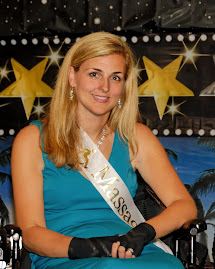
Today I had the opportunity to appear at Raytheon as a guest speaker during their program honoring "National Employment Awareness for People with Disabilities Month." The program was sponsored by the Raytheon Women's Network and the Raytheon Persons with Disabilities Association. Approximately 50 people attended, including senior managers and Human Resources representatives.

I spoke about my experiences as a disabled woman and some of the barriers I have encountered in access and employment. I also explained my role as Ms Wheelchair Massachusetts 2007 and showed a DVD of the 2008 Ms Wheelchair America Competition, where I placed as 2nd runner up. The employees in attendance were very interested in my story and asked lots of follow-up questions.

Shifting the focus to employment, I told the audience about my new position with Hire Disability Solutions (HDS), as Editor of their e-magazine Solutions. HDS is in the process of opening a number of temporary emploment agencies to assist in negating employment barriers that keep disabled people out of the job market.

National unemployment rates for people with disabilities hover at approximately 65%. Many disabled people in this category are ready, willing, and able to go to work, but they have yet to find suitable, sustainable jobs. Initatives such as these (HDS temporary employment agencies specifically for the disabled, and Raytheon's corporate awareness programs) provide excellent opportunities to expand diversity.

Monday, October 1, 2007

Help Restore the Americans with Disabilities Act


Did you know that the Americans with Disabilities Act may not protect someone with a disability from an employer who does not hire or fires that person?

October is National Employment Awareness for People with Disabilities month!

People with disabilities should not be subject to discrimination in the workplace. The Americans with Disabilities Act of 1990 was passed with overwhelming support from both parties and signed by President George H.W. Bush in order to give people with disabilities an equal opportunity to work and a chance to be judged fairly.

But this is not happening. The courts have created a Catch-22 so that a person is "too disabled" to do the job but "not disabled enough" to be protected by the ADA. This is wrong!

Four strong leaders of both parties have introduced a bill to restore the Americans with Disabilities Act to its original intent. You can send an email that is ready to go to your own Representative and your own two Senators.

Go to http://donations.unitedspinal.org and click on Take Action.

If you or someone you know has been fired or not hired due to a disability, add a short description of what happened to the letter you send.

If you get a chance, please thank the primary sponsors of the ADA Restoration Act: Representatives Steny Hoyer (D-MD) and James Sensenbrenner (R-WI), Senators Tom Harkin, (D-IA) and Arlen Specter(R-PA). Harkin was the lead Senator on original passage of the ADA in 1990.

For more information (including a list of all Representatives who have agreed to co-sponsor the ADA Restoration Act) or any other issues in Washington that are important to people with disabilities, please send an email to publicpolicy@unitedspinal.org

Thursday, September 27, 2007

Stem Cell Summit Scholarship Award


I was notified today that I have been chosen to receive a scholarship award from Boston Medical Center to attend the Stem Cell Summit at the Hynes Convention Center on October 2 & 3.

I will also get to meet Michael J Fox Tuesday evening at the Stem Cell Awards dinner!

The climate is changing for stem cell research -- for the better!

Stem cell research represents the universal hope for healing and the political climate is changing for those seeking cures through revolutionary medicine. New rules are being written and public and private funding for research is becoming available. Genetics Policy Institute, Harvard Stem Cell Institute and Burrill Life Science Media Group have joined together to produce The Stem Cell Summit. This unique event will gather the global community of stakeholders to learn what's new, share ideas, search for solutions and focus on advancing stem cell research from "the bench to the bedside."

Meet top innovators, researchers from around the world, clinicians, government officials, business leaders, political strategists, bioethicists, legal experts and advocates to celebrate scientific achievements, confront challenges and chart the future of regenerative medicine. Learn how cutting-edge biomedical research might impact your health and the health of your family and loved ones.


RESEARCH, ADVOCACY, FUNDING, LAW, COMMERCE, PHILANTHROPY, FINANCE, BIOPHARMA, ETHICS, POLITICS, HOSPITAL PERSPECTIVES, PATIENT INFORMATION

I will write a synopsis for my blog on the information I receive at the conference next week. In the meantime, check out The Stem Cell Summit for more information.

Wednesday, September 19, 2007

SCI Awareness Day At The State House


Today I attended the 4th Annual Spinal Cord Injury Awareness Day at the State House. SCI Awareness Day is a collaboration of Massachusetts rehabilitation facilities, consumer organizations, legislators, policy makers and advocates, working towards a common goal to increase funding available for spinal cord injury research in Massachusetts.

This year's program included Massachusetts State Representatives and representatives from the Office of Governor Deval Patrick, the National Spinal Cord Injury Association, the New England Regional Spinal Cord Injury Center at Boston Medical Center, Spaulding Rehabilitation Hospital, the Department of Public Health, the Christopher and Dana Reeve Foundation, the Paralyzed Veterans Association, the Travis Roy Foundation, and the Harvard Stem Cell Institute.

The well-attended symposium was enlightening, invigorating, and offered lots of information relevant to people living with SCI. It was organized by Massachusetts Walks Again.

Monday, September 17, 2007

Upcoming Appearance - Raytheon Speaking Engagement, October 10, 2007


Part of my role as Ms Wheelchair Massachusetts is to speak to the business community about the accomplishments and abilities of people who use wheelchairs. I will have an opportunity to do this at Raytheon on Wednesday, October 10, 2007.

Raytheon is an 80+ year-old, native Massachusetts company that values diversity and honors persons with disabilities in October, during National Disability Employment Awareness Month.

My audience will include any Raytheon employee who wishes to attend, but specifically the members of the Raytheon Women's Network (RWN) and members of the Raytheon Persons with Disabilities Association (RPDA) who work at the Andover Raytheon site. There may also be some senior leaders present.

I will spend 30-40 minutes sharing my story and then do Q&A for another 15-20 minutes or so. I'm really looking forward to my first corporate speaking engaement to support the recruitment, hiring, and retention of people with disabilities.


Learn more about Raytheon...


Raytheon: A History of Global Technology Leadership

Two former college roommates Laurence K. Marshall and Vannevar Bush, along with scientist Charles G. Smith, founded Raytheon Company in Cambridge, Mass., as the American Appliance Company in 1922.

Throughout its more than 80-year history, Raytheon Company has been a leader in developing defense technologies and in converting those technologies for use in commercial markets. From its early days as a maker of radio tubes, its adaptation of World War II radar technology to invent microwave cooking, and its development of the first guided missile, Raytheon has successfully built upon its pioneering tradition to become a global technology leader.

Saturday, September 15, 2007

Two Advocacy Appearances In One Busy Day!

Today I participated in two wonderful events as Ms Wheelchair Massachusetts (MWM):

- FIRST EVENT: The 10th Annual Kevin Ganley Walk in Lowell to raise money for Huntington's Disease


I am pictured above with Sue (L) and Virginia (R), from the Huntington's Disease Society of America, New England Chapter; next I'm addressing the big crowd who showed up despite the pouring rain; and then I spoke with some local supporters who are wheelchair-users living with HD. Below I'm kicking off the walk with Shrek!


AND THEN...


- SECOND EVENT: The 8th Annual South Boston Street Festival to raise money & awareness for MWM


Both events were a huge success and a lot of fun!!!!

Friday, September 7, 2007

Architectural Access Board (AAB) Subcommittee Is Seeking Membership

The Massachusetts Architectural Access Board (AAB) is a state agency that enforces regulations designed to make public buildings accessible to, functional for, and safe for use by persons with disabilities.

To carry out the AAB’s mandate, regulations are incorporated in the Massachusetts building code that are designed to provide full use of buildings and facilities so that persons with disabilities may have equal education, employment, living and recreational opportunities.

The authority of the AAB is triggered by any construction, renovation, remodeling, or alteration of a public building or facility. Public buildings are those that are open to public use, as well as privately financed buildings that are open to and used by the public.

The nine member Board meets every other Monday to hear requests for variances by building owners and to hear complaints about buildings that are believed to be in violation of the AAB regulations. All hearings on complaints and variance requests are open to the public.

The Board also has the authority, after a further hearing, to impose fines of up to $1,000 per violation for each day of noncompliance.

In its efforts to expand the Subcommittee on Regulations, and improve the quality of the regulatory process, the AAB is extending this invitation to all interested parties to have them submit a resume and letter of interest to the AAB Office for membership consideration. This is a volunteer position, which will involve detailed reading and code comparison, as well as individual light research assignments. The Subcommittee on Regulations generally meets 6-8 times a year and are hoping to add more meetings to speed up the promulgation process.

Please submit resumes and letters of interest to the AAB Office, attention Thomas Hopkins, Executive Director at the following address: One Ashburton Place, Room 1310, Boston, MA 02108. Resumes and letters of interest for consideration will be accepted up until Monday, October 1, 2007.

Wednesday, September 5, 2007

Article Appears in Falmouth Enterprise


Ms. Wheelchair Massachusetts Helps Artists Guild Learn About Accessibility
By LAURA M. RECKFORD
September 4, 2007

When Kristen McCosh went to an art opening at the Falmouth Artists Guild last month, she did not expect to have trouble getting into the building.

Ms. McCosh, a quadraplegic, carries her own portable ramp with her. But in the case of the artists guild, which is in a rear unit across from the library lawn on Main Street, even the ramp did not work because of the angle of the building entrance.

Because she could not get into the building Ms. McCosh, whose husband, John McCosh, had two photographs in the juried show, had to settle for seeing photographs of the show that her husband took for her.

But in alerting the artists guild about the accessibility problem, the McCoshes have served to energize the guild to make their new building accessible to everyone.

Artist Guild Executive Director Jill P. Tompkins of Debbie Lane, East Falmouth, and Carolyn P. Partan of Westwood Road, North Falmouth, a guild board member and chairman of the guild’s capital campaign, sat down with Mr. and Ms. McCosh last week to talk about everything from accessible doorways to tables that allow people in wheelchairs to be comfortable.

The artists guild is well into a capital campaign to construct a building next to the Nimrod Restaurant on the corner of Gifford Street and Dillingham Avenue. Its supporters are about $300,000 short of their goal and hope to break ground later this year, Ms. Partan said.

“We were so disappointed she couldn’t come in, and so frustrated,” said Ms. Tompkins, adding that the McCoshes were “very gratious” about the problem.

Ms. McCosh said helping the artists guild with accessibility issues is a perfect fit for her, because since being crowned Ms. Wheelchair Massachusetts 2007, her role is to be an advocate for the needs of the handicapped.

As for the artists guild, Ms. Tompkins said the guild wants to be a place where people of all ages and abilities can come to take arts classes and participate in programs.

“Accessibility is really important,” Ms. Tompkins said. She pointed out that the new location is within walking distance from three schools, Mullen-Hall, Morse Pond, and Lawrence, as well as from the library.

Ms. McCosh, who has worked for nonprofit organizations in grant writing and volunteer coordinating, is working as a peer mentor for people with spinal injuries at Spaulding Rehabilitation Hospital in Boston.

She was injured more than 20 years ago at age 15 in a diving accident in a swimming pool. She missed a year of school because of physical therapy after the accident but returned to her high school, taking classes on the first floor, which she could enter with her wheelchair.

“I’ve always been resourceful,” she said.

As a quadraplegic with a cervical neck injury, she does not have use of her legs or her hands, but can move her arms. Advances in technology since she was first injured allow her to drive herself in a specially outfitted handicapped-accessible van. Advances in laws—the American with Disabilities Act was passed in 1990—have made more and more places accessible to the handicapped.

“It’s not nearly as tough as it was,” Ms. McCosh said.

The McCoshes live in South Boston and built a cottage on Randolph Street in Teaticket in 1990, across the street from Ms. McCosh’s two aunts. Mr. McCosh has family in North Falmouth.

The couple met in college at the University of Massachusetts Boston. Mr. McCosh likes to tell the story of seeing Kristen in the center for disabled students and wanting to meet her. He was taking a short story class at the time and told her he wanted to interview her because a character in one of his stories was in a wheelchair.

“During the ‘interview,’ I got to ask her all the questions I had. The next day, I asked her out,” he said. They were married six years ago at St. Thomas Chapel in Falmouth Heights.

Besides being a photographer whose work can be seen at johnmccoshphotography.com, Mr. McCosh is a writer who has tried his hand at novels and screenplays. He is now working on ghostwriting an autobiography for Ms. Wheelchair Arizona, whose story of being seriously injured at the hands of her husband has been featured on television.
Ms. McCosh, also a writer, said she is writing a series of novels that feature women with disabilities as heroines. She is hoping to try to get a literary agent this fall.

Ms. McCosh said making a building accessible is a benefit to the entire community.

“It sends a strong message that everyone is welcome,” she said, pointing out that some people with handicaps suffer from social isolation, and participating in the arts is a great way to reintegrate them into the community.

Ms. McCosh said she heard about the Ms. Wheelchair contest from friends who encouraged her to enter. At first she laughed it off, but when she looked into it, she found that the pageant, which is in its third year, is not a beauty contest, but an event to promote advocacy for the handicapped, something that interests her.

Unlike other “pageants,” the Ms. Wheelchair contest does not have looks, age, or marital status as criteria. Instead, entrants must use a wheelchair for 100 percent of their daily mobility. Ms. McCosh said that since the primary task of the winner is as an advocate, the contest comprised two public speaking segments, one in front of the three judges and the other in front of a larger group.

Ms. McCosh spoke about physical fitness and ended up being chosen from among the six contestants to be Ms. Wheelchair Massachusetts this past April.

In her speech, she explained how she became involved in “activity-based therapy” at the local YMCA last year at the urging of her husband. The health club, which is only about a 10-minute drive from her house, has advanced machinery in place that helps handicapped people ride a stationary bicycle and walk on a treadmill, for example. Besides making her feel better, the exercise has helped her to lose about 40 pounds, .

In July, she entered the Ms. Wheelchair America pageant in Washington, DC, which is in its 35th year. She was chosen as second runnerup from the 27 contestants.

As Ms. Wheelchair Massachusetts, Ms. McCosh will be traveling across the state speaking to groups, both handicapped and not handicapped.

“Hopefully, I can be the face of awareness throughout the state,” she said.